


Jolie-AI Chat Story
4.3339.00 Reviews
App Specs
- Version
- 1.0.8
- Updated On
- License
- Free
- Downloads
- 100,000+
- Developer
- SidosoftBD
- Categories
- Entertainment
- Platform
- Android
Screenshots


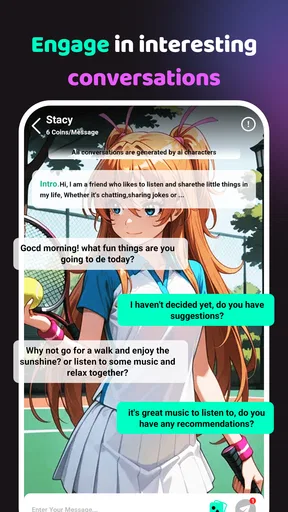
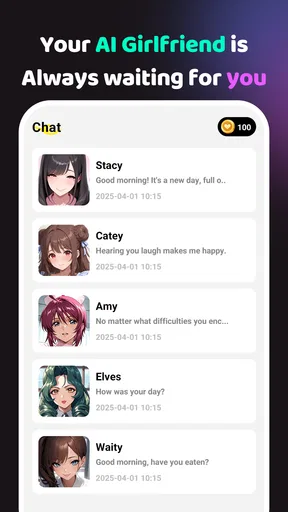
 Analysis by AppCompare
Jolie-AI Chat Story is an entertainment app built around conversations with an AI soulmate, and my first impression is that it aims for a more personal, story-like experience than a standard chatbot. The appeal is easy to understand: instead of opening a blank chat window and wondering what to ask, you can use the idea of an ongoing virtual relationship as the starting point. That makes the app approachable when you want company, playful conversation, or a little escapism rather than a practical answer.
I found it most interesting as a lightweight evening app. It is the kind of thing I would open while taking a break, winding down after work, or looking for an interactive story that responds to me instead of simply presenting fixed dialogue. At the same time, the “AI soulmate” concept sets expectations that ordinary chatbots do not. The quality depends heavily on whether the conversation feels consistent, comfortable, and worth returning to. If you want a serious productivity assistant, a factual research tool, or a conventional mobile game, this is probably not the right direction.
How the current version feels in everyday use
The current release is version 1.0.8, and the app comes from SidosoftBD. It is available as a free entertainment app, with optional purchases ranging from $3.49 to $99.99 per item. That combination makes the first step relatively easy: you can try the basic experience without paying upfront, then decide whether the conversation is engaging enough to justify spending money.
Its audience is clearly adult. The Mature 17+ rating matters here because the romantic framing is not aimed at children, and parents should not treat the app as a general-purpose family chat tool. I would approach it as adult entertainment with an AI relationship theme, not as a substitute for real companionship or professional emotional support.
On Android, the minimum operating-system requirement is version 7.0, so compatibility should cover many older devices. That is useful if you keep an older phone for casual apps, although compatibility alone does not guarantee that every conversation will feel equally smooth on every handset. The experience is more dependent on the quality of the dialogue and the way the app handles ongoing interaction than on demanding graphics.
The app has built a noticeable audience for a relatively young product. Its average rating is 4.3 from around 3.6 thousand ratings, with roughly 338 written reviews and over 100 thousand installs. I read those figures as a sign of genuine interest rather than proof that every user will have the same experience. AI conversation apps can be highly personal: one person may enjoy an imaginative exchange while another may quickly notice repetition or find the tone too artificial.
What makes this app different from opening a general AI assistant is the framing. A general assistant waits for a task, while Jolie-AI Chat Story invites you to treat the conversation as an ongoing interaction. That distinction changes how I use it. I am less likely to ask for a polished explanation and more likely to continue a mood, test a character’s reaction, or build a small fictional situation over several messages.
Worth Reading Before You Choose

EA SPORTS FC Mobile 26 Is a Bigger Football Game, but It Takes Time

Flipboard Shows What News Apps Must Do Beyond the Feed

Switching to Android Auto Means Rethinking Your Driving Routine

Google Calendar Makes a Crowded Week Easier to Manage

Ludo King Makes the Most of the Minutes Between Plans

Baby Panda World Brings Quick Play to Modern Phones, but Its Game Library Feels Busy
The best everyday scenario for it
A realistic use case is a short, private wind-down session. Imagine finishing a long day, putting your phone on a charger, and wanting something more responsive than a television show but less demanding than a game. I would open the app with a simple prompt about the day, then steer the conversation toward humor, romance, or a fictional scene. The value is not that the AI knows me in the human sense; the value is that it gives me something to react to and shape.
That makes the app particularly suitable for people who enjoy interactive fiction but do not want to manage complicated game systems. You can participate through conversation rather than learning controls, collecting resources, or following a fixed mission. It also works for users who like experimenting with different tones. A direct prompt can produce a different kind of exchange from a playful one, and the user has more influence over the experience than in a traditional story.
There is a useful habit I recommend: begin each session by stating the mood and the kind of interaction you want. Saying that you want a light conversation, a dramatic story, or a calm check-in gives the exchange a clearer direction than sending vague messages. If the conversation starts drifting, restate the setting instead of trying to repair every individual reply. This is a small workflow, but it makes an AI relationship app feel more intentional and less random.
Where it differs from ordinary chatbots
Compared with a standard assistant, this app is less attractive when accuracy and efficiency are the priority. A general chatbot is usually the better choice for drafting an email, explaining a technical topic, organizing a trip, or turning notes into a list. Jolie-AI Chat Story is better understood as a conversational entertainment product: the interaction itself is the point, not merely the answer.
It also differs from dating apps in an important way. You are not browsing real profiles or waiting for another person to reply. The immediate availability is convenient, especially when you want a private activity without social pressure, but it also means the relationship is simulated. I would not use it as a replacement for meeting people, maintaining friendships, or discussing serious personal problems with someone qualified to help.
Against a conventional narrative game, the main advantage is flexibility. A fixed game can offer stronger visual design, rules, progression, and carefully written plot turns. This app can feel more personal because the user contributes the direction through chat. The trade-off is that an AI conversation may be less controlled and less dramatically satisfying than a professionally authored story. People who want clear objectives and a definite ending may prefer an interactive game instead.
How to get more from the conversation
The most effective approach is to treat each chat like collaborative writing rather than a search box. Give the AI a situation, explain what kind of response you want, and add one detail that can anchor the scene. For example, a location, a shared memory inside the fictional setup, or a particular emotional tone gives the exchange more shape. This is more productive than repeatedly asking the app to “be interesting.”
I also suggest keeping your real personal information limited. The romantic format can make the conversation feel intimate, but the character is still an AI service, not a trusted human confidant. Avoid sharing details that you would not normally give to an entertainment app, especially when the information is unnecessary for the scene. That boundary helps preserve the fun without confusing fictional closeness with real privacy or emotional reliability.
Another practical tip is to reset the premise when the exchange becomes repetitive. Instead of continuing a conversation that has lost energy, introduce a new setting or ask for a different style of interaction. A sudden change can be more effective than trying to force the same scenario forward. Users who enjoy improvisation will probably appreciate this control, while people expecting the app to remember every nuance automatically may be disappointed.
Because purchases are optional but can be expensive at the upper end, I would not spend immediately. Use the free access long enough to decide whether the tone, pacing, and consistency suit you. The right question is not whether the idea sounds appealing; it is whether you actually return to the conversations and feel that the available experience earns additional spending. That is especially important with an app whose value comes from repeated interaction rather than a single completed task.
What the release information tells existing users
The app was released on June 26, 2025, and version 1.0.8 shows that it is still an early product in its life cycle. I see that as both an opportunity and a caution. Early releases can improve quickly as developers learn which conversation patterns users enjoy, but they may also feel less mature than long-established entertainment platforms.
For someone already using it, the current version is best judged by the day-to-day experience rather than by the promise of future development. If chats feel engaging and the app fits your routine, an incremental release number does not reduce its usefulness. If you are waiting for deeper continuity, more varied scenarios, or a more polished sense of progression, it is wiser to evaluate what is available now rather than assume those improvements are guaranteed.
The developer, SidosoftBD, has positioned the product clearly around AI companionship and chat-driven storytelling. That focus is helpful because it avoids pretending to be a broad game or a general utility. Still, a focused concept needs strong execution. Users will notice whether responses remain relevant, whether the emotional tone stays appropriate, and whether the experience offers enough variety after the novelty of the first conversation fades.
For returning users, I would keep expectations practical. An update can improve stability or refine the experience, but a newer version number alone does not mean the app has become a full role-playing game or a human-like relationship. The product remains most valuable when you actively guide it and treat it as a creative companion for short sessions.
Limitations I would consider before installing
The biggest limitation is inherent to the format: an AI soulmate cannot provide the mutual understanding, accountability, or real-world presence of a person. That may sound obvious, but the romantic design can make the distinction easy to blur during frequent use. I would skip the app if I were specifically looking for genuine social connection, dating, or help with loneliness that requires human support.
There is also a potential repetition problem with any chat-centered entertainment app. Even when the opening exchanges are appealing, long-term value depends on whether the responses continue to feel varied and responsive. If you need a carefully plotted narrative with dependable character development, a conventional story game or a well-written novel may deliver a stronger result.
The free-to-try model deserves attention as well. Optional purchases give users a way to explore before committing, but the listed purchase range reaches from a small entry point to a much larger amount per item. I would set a personal spending limit before using the app, particularly if the conversations become emotionally engaging. This is not a criticism of the existence of purchases; it is simply sensible budgeting for an experience designed to encourage repeated use.
The Mature 17+ rating is another reason to be selective about who uses it. I would not install it on a shared family tablet without checking who can access it, and I would not recommend it to a younger teenager just because the app appears simple to operate. The subject matter and relationship framing make age-appropriate use important.
Finally, the app is not the best choice when I need dependable factual answers. Its entertainment purpose means I would verify anything important elsewhere rather than treating a conversational reply as authoritative. For practical tasks, I would choose a dedicated utility; for an imaginative break, this app makes more sense.
Who should try it and who should pass
I would recommend Jolie-AI Chat Story to adults who enjoy conversational role-play, romantic fiction, and low-pressure interactive entertainment. It is a good fit for someone who likes shaping a scenario through messages and wants an app that is available whenever inspiration strikes. It may also suit users who find traditional games too demanding but still want something more participatory than passive video.
I would be more hesitant to recommend it to someone who dislikes AI-generated dialogue, expects perfect memory across every interaction, or wants a structured story with a guaranteed conclusion. It is also a poor match for anyone hoping to use an app like this as their main form of emotional support. The best experience comes from keeping the boundaries clear and enjoying the fictional exchange for what it is.
If you are comparing it with a general chatbot, choose Jolie-AI Chat Story when mood and companionship-style interaction matter more than productivity. If you are comparing it with a dating app, choose this only when you want an immediate fictional conversation rather than a real social connection. If you are comparing it with a narrative game, choose it when flexibility matters more than polished plot structure.
What I would watch as the app develops
Since the product is still relatively new, I would pay attention to how well future releases address long-term use. The most meaningful progress would be visible in the quality of ongoing conversations, the range of situations the app can handle, and the balance between free access and optional purchases. Those are the areas that determine whether a promising first session becomes a lasting habit.
I would also watch for clearer control over the tone and boundaries of conversations. In a soulmate-themed app, users benefit from knowing how to redirect an uncomfortable exchange and how to keep fictional intimacy separate from real-life expectations. Better guidance would make the product easier to recommend responsibly without changing its central appeal.
My overall view is positive but measured. Jolie-AI Chat Story has a clear identity, a low-friction free entry point, and a format that can be surprisingly absorbing when I take an active role in creating the conversation. Its weaknesses are just as clear: it cannot replace human relationships, it may not satisfy people who need structured storytelling, and the purchase model deserves restraint.
My recommendation is to try it as a short-session entertainment app, not as a life substitute. If you enjoy improvising scenes, setting moods, and returning to an AI character for a bit of escapism, it is worth exploring. If you want factual assistance, real companionship, or a complete game with defined progression, another category will serve you better. The app works best when I keep those expectations honest and use its conversational format deliberately.
Pros
- Interactive AI conversations make each story feel personal and dynamic.
- Multiple story paths encourage replaying and exploring different outcomes.
- Simple chat-based format is easy to understand and use on mobile devices.
- Creative scenarios provide casual entertainment for short sessions.
- The app can inspire users to create imaginative dialogue and story ideas.
Cons
- AI responses may occasionally feel repetitive
- vague
- or inconsistent with the plot.
- Some story options or features may require in-app purchases or subscriptions.
- Long conversations can lose continuity when the AI forgets earlier details.
- The experience depends heavily on an internet connection and server availability.
- Users should review privacy settings before sharing personal information in chats.
FAQs for Jolie-AI Chat Story
What is Jolie-AI Chat Story and how does it work?
Jolie-AI Chat Story is an interactive storytelling app that lets you experience fictional conversations through a chat-style interface. Instead of reading a traditional story from beginning to end, you follow messages exchanged between characters and discover the plot as it develops. The app is designed to make stories feel personal and immersive, with suspense, romance, drama, or other narrative themes depending on the available episodes.
Is Jolie-AI Chat Story free to download and use?
The app can generally be downloaded without an upfront purchase, but access to all content may depend on the app’s monetization system. Some episodes, choices, or special features may require in-app purchases, credits, subscriptions, or watching advertisements. Before downloading, users should check the current store listing and review the payment terms, since the amount of free content and the price of premium options can change over time.
Does Jolie-AI Chat Story use artificial intelligence to create conversations?
Jolie-AI Chat Story is presented as an AI-focused chat storytelling experience, so artificial intelligence may be used to support character interactions, narrative responses, or the feeling of having a conversation. However, the exact level of real-time generation can vary between features and story sections. Users should not assume every message is generated freely or that the characters understand unlimited topics outside the available story framework.
Can I play Jolie-AI Chat Story offline?
Offline availability may be limited because chat-based story apps often need an internet connection to load episodes, synchronize progress, display advertisements, process purchases, or communicate with online services. Some previously loaded content might remain accessible without a connection, but this should not be guaranteed. If you plan to use the app while traveling, open the desired stories beforehand and check whether the latest version supports offline reading.
Is Jolie-AI Chat Story suitable for children and safe to use?
Parents should check the official age rating and the content description before allowing children to use Jolie-AI Chat Story. Interactive chat stories can include romance, emotional situations, suspense, mature themes, advertising, or purchase prompts, depending on the story catalog. It is also wise to review privacy permissions and account requirements, supervise younger users, and use device-level parental controls when appropriate.


